Worked example
Change variables in an indefinite integral
Evaluate using .
Differentiate to get . Hence .
The integral becomes .
Restore to obtain .
Use a given substitution to rewrite the integrand, transform limits and evaluate exact integrals.
Try the quick check →Section 1 of 5 · Core · about 6 min
Write down the given substitution and differentiate it. Then group the original differential with the factor it needs. The transformed integral should have one variable.
Worked example
Evaluate using .
Differentiate to get . Hence .
The integral becomes .
Restore to obtain .
Section 2 of 5 · Core · about 8 min
Sometimes the substitution replaces a square root but leaves a separate factor of . Rearrange the given relation to express that factor in terms of .
Worked example
For , integrate using .
From obtain and . In this domain .
The root in the denominator becomes . Therefore the integral is .
Integrate to get then replace to obtain .
Worked example
Use in . In the resulting integral of , give and .
Try it on paper first.
The leftover factor is . Also .
Multiplying gives . This determines both requested coefficients.
Integrating in gives . Substitute back to return to the original variable.
Section 3 of 5 · Core · about 7 min
Apply the given substitution to the starting and finishing endpoints separately. If the substitution decreases, the new starting value can be larger than the finishing value.
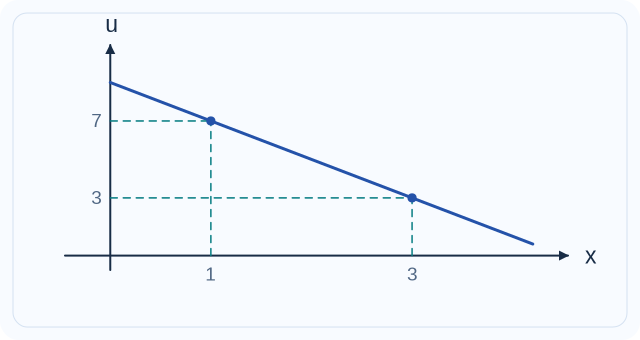
For , inputs then give limits then . The substitution also introduces a negative differential.
Worked example
Evaluate using .
The limits in order are and . Also .
The integral is .
Evaluate .
Worked example
Use to evaluate . Give the transformed lower and upper limits in the original order, then the exact integral.
Try it on paper first.
At the original endpoints the new limits are then .
contributes the minus sign. Swapping the transformed limits cancels it.
Evaluate the resulting positive integral to get .
Section 4 of 5 · Core · about 8 min
With , one cosine factor belongs to the differential. The identity converts an extra even power of cosine into a power of .
Worked example
Evaluate using .
Set aside one for . Rewrite the remaining as .
The limits and become and . The integral becomes .
Evaluate .
Section 5 of 5 · Core · about 5 min
An increasing original variable can correspond to a decreasing new variable.
Worked example
Use to evaluate . Give the transformed lower and upper limits in the original order, then the exact integral.
At the original endpoints the new limits are then .
contributes the minus sign. Swapping the transformed limits cancels it.
Evaluate the resulting positive integral to get .
Question 1 of 4
0 / 4 checked in this collection
Use to evaluate . Give in the form .
Enter the complete form using all three fields: a(x − h)² + c.
Progress stays in this browser. Create an account to save it or sign in.
Show your working on paper and compare it with the worked solution and marking guidance.
Your review plan starts after your first check.