Maths4U · Learning together
Line and rotational symmetry
Work on paper, compare with the solution or mark scheme, and record your result. Submit solutions and files in your teacher’s assignments.
Search & filters
Available tasks: 20
- 1Exam4 pts
Count mirror lines and rotational matches
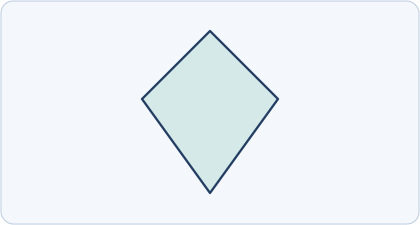
How many lines of symmetry does the pictured kite have?
Show the readings or working used.
[2]Find the order of rotational symmetry of the pictured rectangle.

Show the readings or working used.
[2]
- 2Exam4 pts
Count mirror lines and rotational matches
How many lines of symmetry does the pictured square have?

Show the readings or working used.
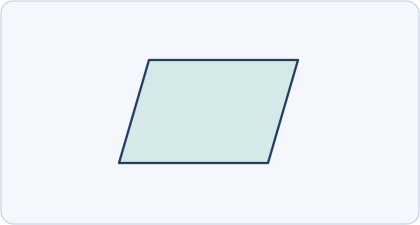
[2]Find the order of rotational symmetry of the pictured parallelogram.
Show the readings or working used.
[2]
- 3Exam4 pts
Count mirror lines and rotational matches
How many lines of symmetry does the pictured rectangle have?
Show the readings or working used.
[2]Find the order of rotational symmetry of the pictured square.
Show the readings or working used.
[2]
- 4Exam4 pts
Count mirror lines and rotational matches
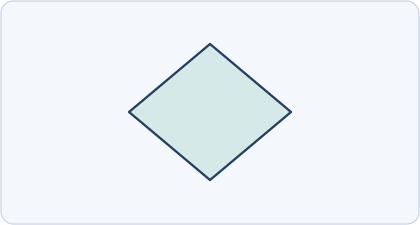
How many lines of symmetry does the pictured rhombus have?
Show the readings or working used.
[2]Find the order of rotational symmetry of the pictured kite.
Show the readings or working used.
[2]
- 5Exam4 pts
Compare triangle and quadrilateral symmetry
Find the order of rotational symmetry of the pictured kite.
Show the readings or working used.
[2]How many lines of symmetry does this equilateral triangle have?
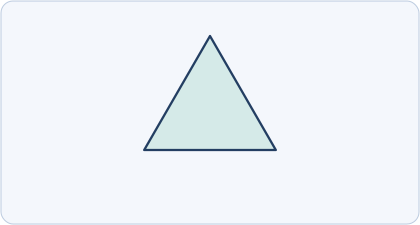
Show the readings or working used.
[2]
- 6Exam4 pts
Compare triangle and quadrilateral symmetry
Find the order of rotational symmetry of the pictured rectangle.
Show the readings or working used.
[2]How many lines of symmetry does this isosceles triangle have?
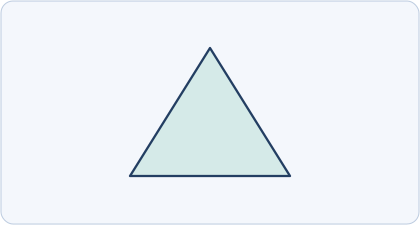
Show the readings or working used.
[2]
- 7Exam4 pts
Compare triangle and quadrilateral symmetry
Find the order of rotational symmetry of the pictured parallelogram.
Show the readings or working used.
[2]How many lines of symmetry does this scalene triangle have?
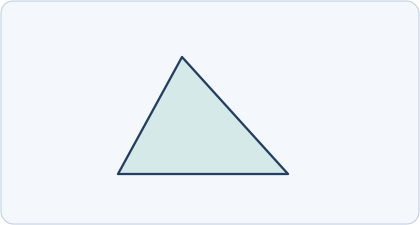
Show the readings or working used.
[2]
- 8Exam4 pts
Compare triangle and quadrilateral symmetry
Find the order of rotational symmetry of the pictured square.
Show the readings or working used.
[2]How many lines of symmetry does this right-angled triangle have?
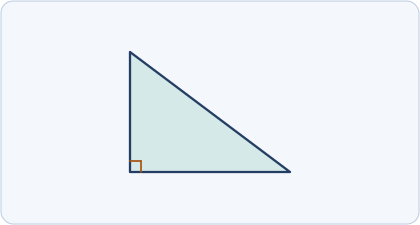
Show the readings or working used.
[2]
- 9Exam4 pts
Find the order of a regular polygon
How many lines of symmetry does this right-angled triangle have?
Show the readings or working used.
[2]Find the order of rotational symmetry of a regular polygon with 6 sides.
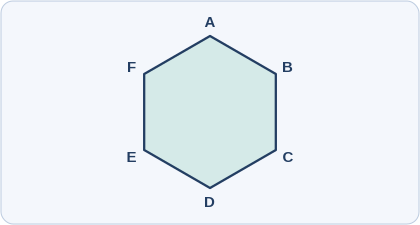
Show the readings or working used.
[2]
- 10Exam4 pts
Find the order of a regular polygon
How many lines of symmetry does this equilateral triangle have?
Show the readings or working used.
[2]Find the order of rotational symmetry of a regular polygon with 8 sides.

Show the readings or working used.
[2]
- 11Exam4 pts
Find the order of a regular polygon
How many lines of symmetry does this isosceles triangle have?
Show the readings or working used.
[2]Find the order of rotational symmetry of a regular polygon with 10 sides.

Show the readings or working used.
[2]
- 12Exam4 pts
Find the order of a regular polygon
How many lines of symmetry does this scalene triangle have?
Show the readings or working used.
[2]Find the order of rotational symmetry of a regular polygon with 12 sides.

Show the readings or working used.
[2]
- 13Exam4 pts
Recover a smallest matching angle
Find the order of rotational symmetry of a regular polygon with 12 sides.
Show the readings or working used.
[2]By what smallest positive angle does a regular 5-sided polygon rotate onto itself?
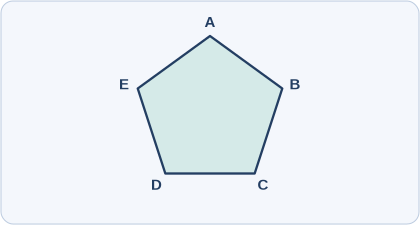
Show the readings or working used.
[2]
- 14Exam4 pts
Recover a smallest matching angle
Find the order of rotational symmetry of a regular polygon with 5 sides.
Show the readings or working used.
[2]By what smallest positive angle does a regular 6-sided polygon rotate onto itself?
Show the readings or working used.
[2]
- 15Exam4 pts
Recover a smallest matching angle
Find the order of rotational symmetry of a regular polygon with 6 sides.
Show the readings or working used.
[2]By what smallest positive angle does a regular 8-sided polygon rotate onto itself?
Show the readings or working used.
[2]
- 16Exam4 pts
Recover a smallest matching angle
Find the order of rotational symmetry of a regular polygon with 8 sides.
Show the readings or working used.
[2]By what smallest positive angle does a regular 10-sided polygon rotate onto itself?
Show the readings or working used.
[2]
- 17Exam4 pts
Finish a mirrored square pattern
By what smallest positive angle does a regular 10-sided polygon rotate onto itself?
Show the readings or working used.
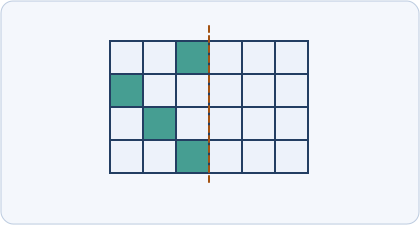
[2]Shade four new cells to complete the vertical line symmetry.
[2]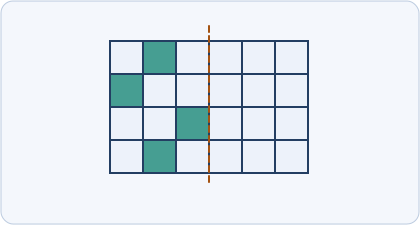
- 18Exam4 pts
Finish a mirrored square pattern
By what smallest positive angle does a regular 12-sided polygon rotate onto itself?
Show the readings or working used.
[2]Shade four new cells to complete the vertical line symmetry.
[2]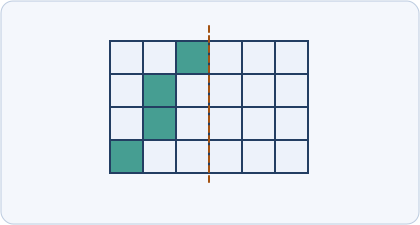
- 19Exam4 pts
Finish a mirrored square pattern
By what smallest positive angle does a regular 5-sided polygon rotate onto itself?
Show the readings or working used.
[2]Shade four new cells to complete the vertical line symmetry.
[2]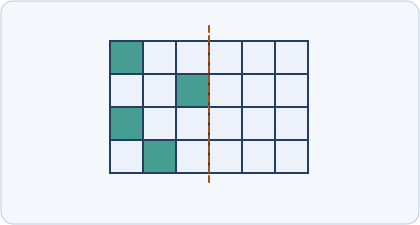
- 20Exam4 pts
Finish a mirrored square pattern
By what smallest positive angle does a regular 6-sided polygon rotate onto itself?
Show the readings or working used.
[2]Shade four new cells to complete the vertical line symmetry.
[2]